
Backwards Thinking
Fruit and vegetable production

Successful small farming requires a bit of business sense, some training and a lot of good decision making. It’s not really different from a lot of other small businesses.
When farming, don’t get distracted by the dazzling lights of what’s possible. It doesn’t matter if you’re just casually starting some homestead crop or trying to organize a significant enterprise. No matter how good your vision, you’ve probably left something out. Small farms are vertically integrated, much more than large farms or even most businesses. That makes running one interesting, but also creates more potential points of difficulty or even failure. Success comes to those who temper their vision with a good grasp of processes.
Vision versus process
What does one think of when starting in the business of farming? You survey the possibilities, all the plants or animals you could grow and what it takes to grow them. You hear about all the farmers in the area and what they’re doing. Talking to experts, you begin to steer toward one or a handful of crops.
You envision the garden plots of vibrant vegetables, fields of waving grain or a happy herd of grazing livestock. Imagining yourself doing farm work, you tick through the tasks required: planting, weeding, harvesting and the daily rhythm of chores. You might think about a machine you’ll need to get the work done, say, a tractor with a rotary tiller, whatever.
You’re a good business person, so you envision selling. You do more than envision it, you list in your mind the specific ways you will sell your production, whether that’s at a market, or wholesale, or direct-to-consumer. Now you’re on the right track.
Start with the end in mind, says one famous business book, to which I’ll add keep the middle and the beginning in mind, too. To help with that, I’ll lay out how to plan effectively for a new enterprise.
Selling. Not only list in your mind the way you will sell, go ahead and contact potential customers. If you’re selling at a market, that’s not possible, of course. If you have a direct-to-consumer business, make sure your newsletter announces what will be available and when well in advance of the date. Best of all, if you’re selling wholesale, get a contract in place that names the price and amount of production. If you can’t get a contract, then at least get some kind of oral assurance that the customer wants your product before you put seed in the ground.
Processing. This is the step some small farmers–me, for example–don’t spend enough time figuring out. It’s pretty easy to romanticize or have a hazy, happy image of most of the other steps. Processing is most like a manufacturing activity, and it’s often glossed over. Usually, vegetables and fruit don’t come out of the field ready to sell.
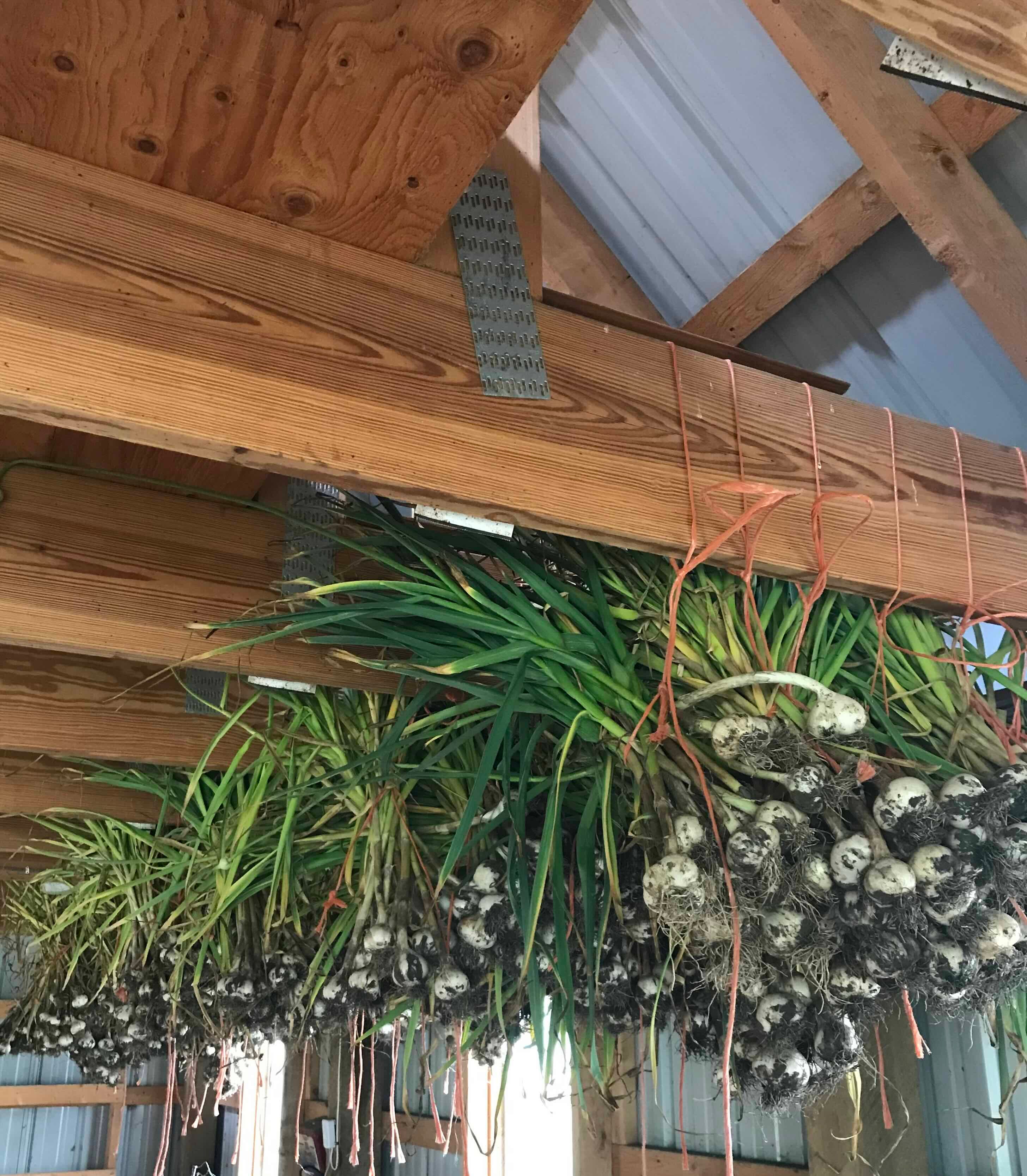
Produce usually requires a pack shed, which is an expensive bit of infrastructure. It will have running water, washable surfaces and a way to remove waste water far from both the produce and the field it came from. Even small producers may have pack sheds with carefully laid out drains. They also have coolers, often ones that are surprisingly large. The more you want to sell, the more elaborate and expensive your pack shed.
How do you get started? At minimum the pack shed needs a roof and a floor, even if you’re just standing on pallets laid out on the ground under a tarp roof. You can use a hose for running water, but you may have to collect the waste water in pails and dump it where it won’t cause problems. Then you can put your produce in a cooler or any refrigerator in, say, a garage. But that’s the bare minimum.
As you can tell, the costs of infrastructure add up quickly. Often, we think of infrastructure replacing manual labor, but in the case of fruit and vegetable production, there’s still plenty of that. As I mentioned in a previous article, cherries need to be sorted, washed and packed by hand. It would be better if they could be pitted and frozen, but that’s beyond our capabilities now. Even garlic, which doesn’t need to be washed, requires a low humidity environment to cure, and then has to have its tops trimmed and wrappers cleaned, a process that is more laborious coming from clay soil, like we have here, than it is in sandier soils. There are ways to ramp up processing infrastructure, but plan on spending a lot of time on getting all the processing done.
This is also the step that’s the biggest barrier to local food production. To feed any noticeable proportion of a local population means industrial level post-harvest processing. It’s super-expensive, and getting a return on investment usually requires that the processing plant be used at full capacity, necessitating a lot of growers to feed the factory. Now that most demand is satisfied by industrial food production with its complicated, often international, supply chains, it’s nearly impossible to replicate it locally by solving the chicken (processing) or the egg (growers) problem.
Harvesting. Here’s what you always pictured when you started farming. It ends up being a lot of work, but it’s out in the field or greenhouse. There’s often a crew to make the work into a communal activity, assuming any group of people form a sort of community.
Irrigation, fertility and pest control. Sometimes this step is as simple as a walk through the field to reassure yourself that everything is growing, and nothing is eating into your profits by displacing or eating your plants. Other times, there’s more busy work. For cherries, we have to net each tree to make sure birds don’t eat the berries before we can harvest them. Many other vegetable crops require extensive and laborious weeding or chemical control to remove competitors. Sometimes, there’s an insect that you must manually remove or spray with either an organic or conventional pesticide.
The plants all need water, which means either you have to install irrigation lines, or you have to have some other way of delivering water when it doesn’t conveniently fall from the sky when you want it. It’s nice if your irrigation system is set up so you can add fertilizer to the water, which is what we do. We inject fish emulsion, smelly stuff, into the irrigation lines to deliver some nitrogen to the plants mid-season.
We also top dress some crops with pelleted fertilizer, either hydrolyzed feather meal from poultry or Chilean nitrate, a mined product that comes from the high-altitude desserts of Chile. Both are listed for organic use.
Planting. This is another step that you probably had in mind when you first imagined starting a farm. Whether you have an elaborate seeder or seedling planter pulled behind a tractor or you’re dropping seeds by hand into a furrow you dug yourself, it’s the hopeful part of farming. The season is new, the air is fresh and starting to warm and farmers are full of optimism. Good times.
Ground prep. This one is also easy to envision. You remove the residue from the last crop, work up the soil, maybe add some fertilizer or other amendment. A lot of this work can be done with a machine so it goes pretty quickly.
Planning. This is where vegetable farmers spend the winter looking at seed catalogues. You tick off the list of supplies you need for the coming year. As you get experience, you also think through which infrastructure improvements you will attempt in the coming year. There always are some, and they range from the straightforward, no regrets moves, to the ones where you feel like you’re rolling the dice. Winter is a good time to apply for one of the many grants that governments and non-profit organizations offer to small farmers, except that you usually can’t plan to receive one.
Keep your eyes open
The bright sparkling lights of all the farming possibilities can blind you to the realities of making a new enterprise run. Yes, you can try growing elderberries or hazelnuts. You can start making hay on the back pasture. You can add all sorts of crops, and it’s fun to daydream about how each of them will bring you prosperity and satisfaction.
Each of them requires new infrastructure, new processing activities and new equipment, especially if you want to grow them in meaningful quantities. At this point in my farming career, I ask questions about each of the steps above before I even begin to think about putting seed in the ground. The list is not comprehensive, of course. Every farmer needs to think about markets, competition, government intervention through regulations or incentives (including, these days, the end of the incentives) and random events like drought or flooding that make planning difficult.
Small farms are curious because they’re so vertically integrated. For big businesses, vertical integration is often a good thing, allowing them to control supply chains and even monopolize production. For small farms, it means that farmers may end up pursuing activities that were not on their radar when they embarked on an enterprise. Just remember that the possibilities only seem endless, and be aware of the many, many activities that go into running a small farm.